
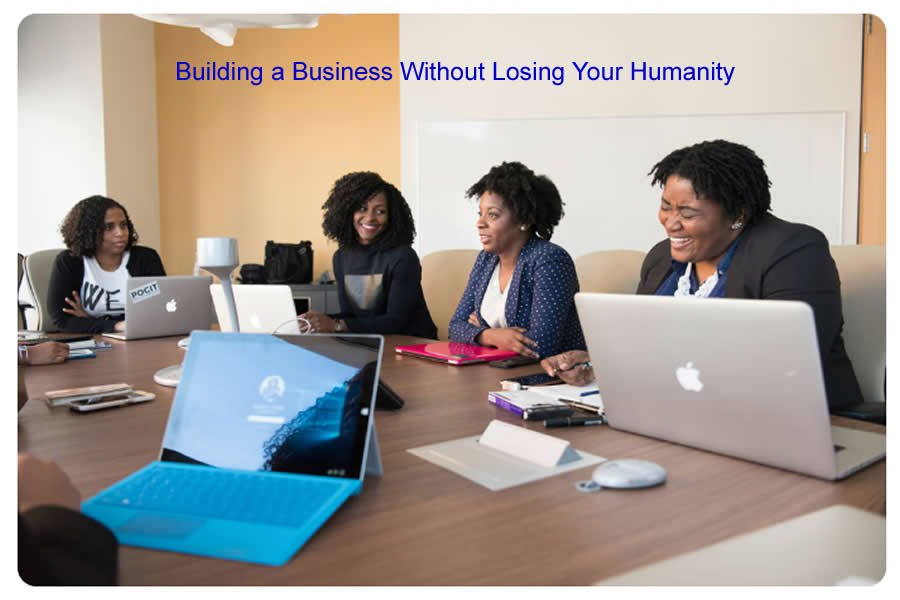
Building a Business Without Losing Your Humanity
There is a quiet question many business owners ask themselves but rarely say out loud: Is it possible to build something successful without becoming someone I don’t recognize?
In a world that often celebrates relentless hustle, aggressive competition, and profit at all costs, many people feel pressured to harden themselves just to survive in business. Yet more entrepreneurs are discovering that losing their humanity is not the price of success—it is often the reason success feels empty.
Building a business should not require abandoning empathy, integrity, or personal values. In fact, these qualities may be the very things that sustain a business in the long run.
The Myth That Business Must Be Ruthless
For a long time, business culture rewarded toughness over thoughtfulness. Being “hard” was mistaken for being strong. Showing empathy was seen as weakness.
But real life tells a different story.
Businesses that rely on fear, exploitation, or dishonesty may grow quickly, but they rarely last. The cost shows up in high staff turnover, damaged reputation, customer distrust, and personal burnout.
Humanity is not the opposite of strength—it is the foundation of it.
Profit Is Important, But It Is Not the Only Goal
Every business needs profit to survive. There is no shame in wanting financial stability or growth. The problem begins when profit becomes the only measure of success.
When money overrides every other consideration, decisions become shortsighted. People are treated as tools. Values are compromised. And eventually, the business loses its soul.
A healthy business balances profit with purpose. It asks not only “Will this make money?” but also “What will this cost us—emotionally, ethically, and socially?”
People Are Not Resources to Be Used
Employees, customers, suppliers, and partners are human beings before they are roles or numbers.
Building a business without losing your humanity means:
- Listening instead of dominating
- Correcting without humiliating
- Leading without fear
- Paying fairly when possible
- Communicating honestly, even when it is uncomfortable
People remember how you made them feel long after they forget what you sold them.
Boundaries Protect Humanity
Many business owners lose themselves not because they lack values, but because they lack boundaries.
Working nonstop, answering messages at all hours, sacrificing health and relationships in the name of growth—these habits slowly erode the person behind the business.
A sustainable business respects limits. It allows room for rest, reflection, and life beyond work. A burned-out owner cannot build anything meaningful.
Protecting your time, health, and personal life is not selfish. It is responsible leadership.
Kindness Is Not Bad for Business
Kindness does not mean avoiding hard decisions. It means making them with care.
Sometimes kindness looks like:
- Giving honest feedback instead of silent resentment
- Offering flexibility during difficult seasons
- Treating customers fairly even when mistakes happen
- Choosing long-term trust over short-term gain
Kindness builds loyalty. And loyalty is one of the most valuable assets any business can have.
Your Values Shape Your Reputation
Every business leaves a trail. People talk. Experiences are shared. Reputation spreads faster than marketing.
When your business is guided by clear values—honesty, respect, fairness, accountability—people notice. Not all customers will stay, but the right ones will. The same is true for employees and partners.
A business built with integrity may grow more slowly, but it grows stronger.
Success Should Not Cost You Your Identity
At some point, every business owner faces choices that test their values. Shortcuts appear. Compromises feel tempting. Pressure increases.
This is where humanity matters most.
A business that requires you to lie constantly, exploit others, or silence your conscience is not success—it is a slow loss of self.
True success allows you to look at what you have built and still recognize who you are.
A Different Kind of Legacy
Beyond profit and expansion, every business leaves a legacy.
It may be:
- A workplace where people felt respected
- A brand customers trusted
- A service that genuinely helped others
- A model of leadership rooted in dignity
These things outlast numbers on a balance sheet.
Final Reflection
Building a business without losing your humanity is not always easy. It requires patience, courage, and consistency. It means choosing integrity when shortcuts are available and compassion when pressure is high.
But in the end, it leads to something rare and valuable—a business that succeeds without breaking the person behind it.
And that kind of success is worth protecting.
