
Why Consistency Will Beat Speed in 2026: The New Advantage in Business and Personal Growth
For years, speed has been glorified as the ultimate competitive edge. Startups raced to scale. Professionals chased rapid results. Businesses measured success by how quickly they could expand, launch, or dominate attention cycles. Faster was assumed to mean better.
Yet the realities shaping 2026 suggest a subtle but powerful shift. In an environment defined by information overload, economic uncertainty, and shrinking attention spans, consistency — not speed — is emerging as the more reliable driver of progress.
The race is no longer always won by those who move first. Increasingly, it is won by those who endure, adapt, and persist.
The Hidden Fragility of Speed
Speed delivers visible excitement. Rapid growth, quick wins, viral moments, and aggressive expansion often create the appearance of success. However, acceleration frequently carries structural risks.
Fast execution can produce:
- Unstable processes
- Burnout and decision fatigue
- Quality compromises
- Short-lived momentum
What appears impressive in the short term may prove difficult to sustain. Rapid gains without durable systems often collapse under pressure.
Why Modern Environments Reward Stability
Markets, workplaces, and digital spaces have become noisier and more volatile. Consumers face constant choices. Audiences are flooded with content. Professionals navigate shifting expectations.
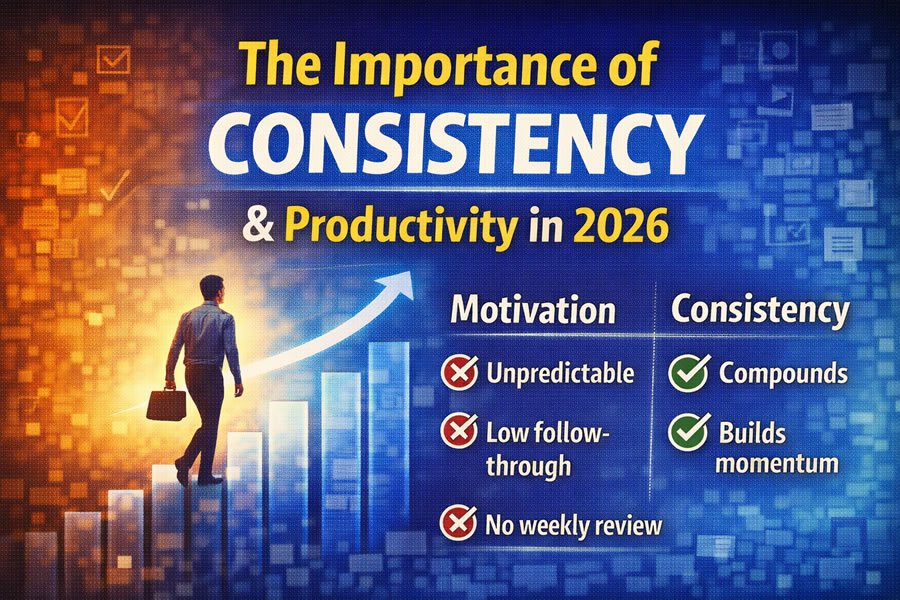
In such conditions, consistent performance becomes more valuable than bursts of intensity. Reliability builds trust. Predictability reduces friction. Steady progress compounds.
Consistency signals discipline, a trait increasingly associated with credibility and long-term competence.
The Psychology Behind Sustainable Progress
Human performance is not designed for perpetual sprinting. While short periods of intense effort are possible, prolonged acceleration typically leads to exhaustion.
Consistency aligns more closely with natural cognitive and emotional rhythms. Small, repeated actions demand less mental strain than dramatic, irregular pushes. Over time, steady effort produces measurable, often surprising outcomes.
Momentum built gradually tends to be more resilient than momentum created suddenly.
Business Lessons: Endurance Over Haste
For businesses, the implications are significant. Companies that prioritise sustainable routines over hurried expansion often achieve stronger operational foundations.
Consistency-driven organisations typically focus on:
- Process refinement
- Customer relationship stability
- Brand reliability
- Incremental improvement
Rather than chasing constant reinvention, they build systems capable of supporting growth without disruption.
Professional Growth: The Compound Effect
Careers rarely advance through isolated breakthroughs alone. Skill mastery, reputation building, and opportunity creation are often products of repeated, disciplined effort.
Consistent behaviours — continuous learning, dependable delivery, steady networking — generate compounding advantages. Over time, these patterns influence visibility, trust, and perceived expertise.
Speed may attract attention. Consistency secures credibility.
Digital Economy Realities
The digital landscape further reinforces this shift. Audiences increasingly favour creators, brands, and professionals who show up regularly with dependable value rather than sporadic bursts of activity.
Algorithms, consumer behaviour, and trust dynamics reward sustained engagement. Consistency fosters familiarity, and familiarity strengthens loyalty.
Why Consistency Outperforms in Uncertain Times
Uncertainty amplifies the value of stability. In unpredictable environments, steady performance provides a form of strategic insulation. Businesses, professionals, and individuals who maintain disciplined routines often navigate disruptions more effectively.
Consistency does not eliminate volatility. It mitigates its impact.
Rethinking Competitive Advantage for 2026
The emerging lesson for 2026 is not that speed has become irrelevant. Agility and timely execution remain important. However, speed without consistency is fragile, while consistency with measured adaptability is durable.
Progress increasingly depends on the ability to sustain effort, maintain standards, and build gradual momentum.
In a world captivated by immediacy, those who persist quietly may hold the strongest advantage.
