
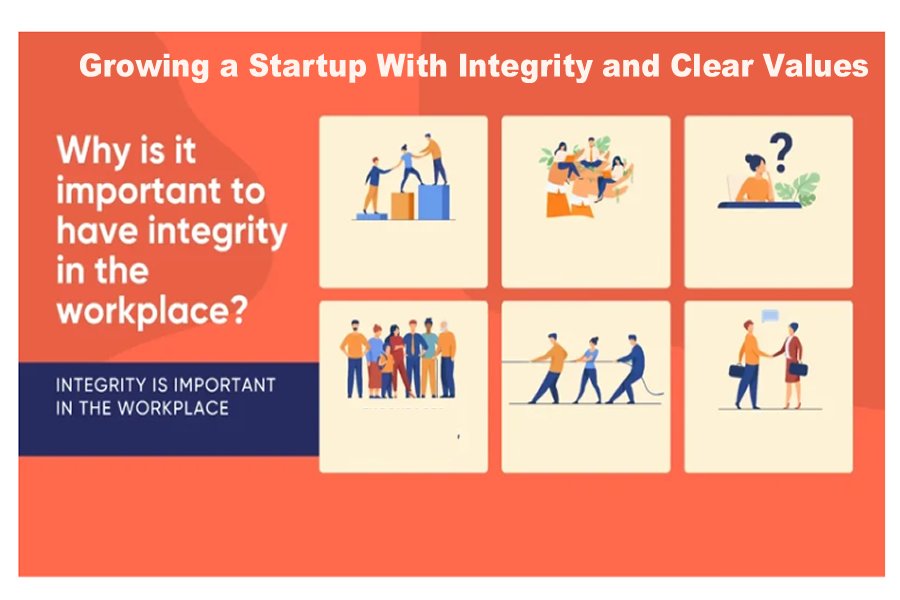
Growing a Startup With Integrity and Clear Values: Why Principles Matter More Than Speed
In the early stages of a startup, growth often dominates every conversation. Founders track metrics obsessively, chase market share, refine pitch decks, and search for capital. Survival and expansion become urgent priorities, sometimes overshadowing a quieter but equally critical concern: how that growth is achieved.
Integrity and values rarely attract the same attention as revenue charts or funding announcements. Yet history repeatedly shows that the character of a company, shaped in its formative years, often determines its long-term resilience. Startups built on fragile ethical foundations may expand rapidly, only to encounter credibility crises, internal fractures, or customer distrust later.
Sustainable growth is not merely about acceleration. It is about direction and discipline.
The Pressure That Tests Young Companies
Startups operate in an environment defined by uncertainty. Limited resources, competitive threats, investor expectations, and operational challenges generate constant pressure. Under such conditions, shortcuts can appear rational.
Common temptations include:
- Overpromising to customers or investors
- Compromising product quality for speed
- Neglecting employee welfare
- Engaging in questionable financial practices
These decisions rarely feel dramatic at the moment. They often present themselves as temporary adjustments justified by necessity. Over time, however, small ethical concessions can reshape organizational culture in damaging ways.
Why Integrity Is a Strategic Asset
Integrity is frequently framed as a moral concept, but its business implications are substantial. Trust remains one of the most valuable yet fragile assets for any young company.
When stakeholders — customers, employees, partners, investors — perceive consistency between a startup’s words and actions, confidence strengthens. Trust reduces friction, improves loyalty, and enhances reputation. Conversely, credibility gaps erode relationships quickly and can be difficult to repair.
For startups lacking decades of brand history, integrity functions as a powerful differentiator.
Defining Values Early, Not Retroactively
Clear values rarely emerge by accident. They require deliberate articulation and reinforcement. Startups that postpone conversations about principles often discover that informal norms, rather than intentional standards, begin guiding behaviour.
Effective value-setting involves:
- Explicit statements of guiding principles
- Leadership behaviour aligned with declared values
- Transparent decision-making processes
- Accountability mechanisms
Values are not slogans. They are operational standards reflected in daily choices.
Consistency Between Growth and Ethics
Rapid expansion introduces complexity. New hires, evolving processes, customer scaling, and market adaptation increase operational strain. Without strong cultural anchors, organizational identity can become diluted.
Maintaining integrity during growth requires vigilance:
- Preserving quality standards despite pressure
- Communicating honestly about capabilities and limitations
- Treating employees fairly as workloads expand
- Upholding financial transparency
Growth challenges values most when adherence becomes inconvenient.
The Internal Impact of Ethical Discipline
Integrity influences not only external perception but also internal cohesion. Teams working within principled environments often display stronger engagement, clearer expectations, and greater mutual trust.
Unstable ethical climates, by contrast, generate uncertainty. Employees may struggle to interpret priorities or feel conflicted about decisions. Over time, morale and productivity suffer.
Values function as stabilizing forces in volatile business conditions.
Balancing Ambition With Responsibility
Ambition is indispensable in entrepreneurship. However, ambition detached from ethical consideration can produce fragile success. Startups that pursue expansion without regard for impact — on customers, employees, communities, or partners — risk reputational and operational consequences.
Responsible growth does not imply reduced competitiveness. Rather, it reflects disciplined decision-making that considers long-term implications alongside short-term gains.
Building a Reputation That Endures
Early-stage companies often focus on immediate milestones: product launches, funding rounds, market entry. Yet reputational foundations are laid quietly through everyday actions long before public recognition arrives.
Integrity, once compromised, is costly to rebuild. Values, once embedded, provide enduring guidance through uncertainty.
A Long-Term View of Startup Success
Startups frequently measure success by speed — how quickly they scale, secure investment, or disrupt markets. But endurance, credibility, and trust often prove more decisive over time.
Companies grounded in clear principles may not always grow fastest, but they tend to build more durable relationships and reputations. In an increasingly transparent business environment, integrity is no longer optional rhetoric. It is a structural advantage.
